|
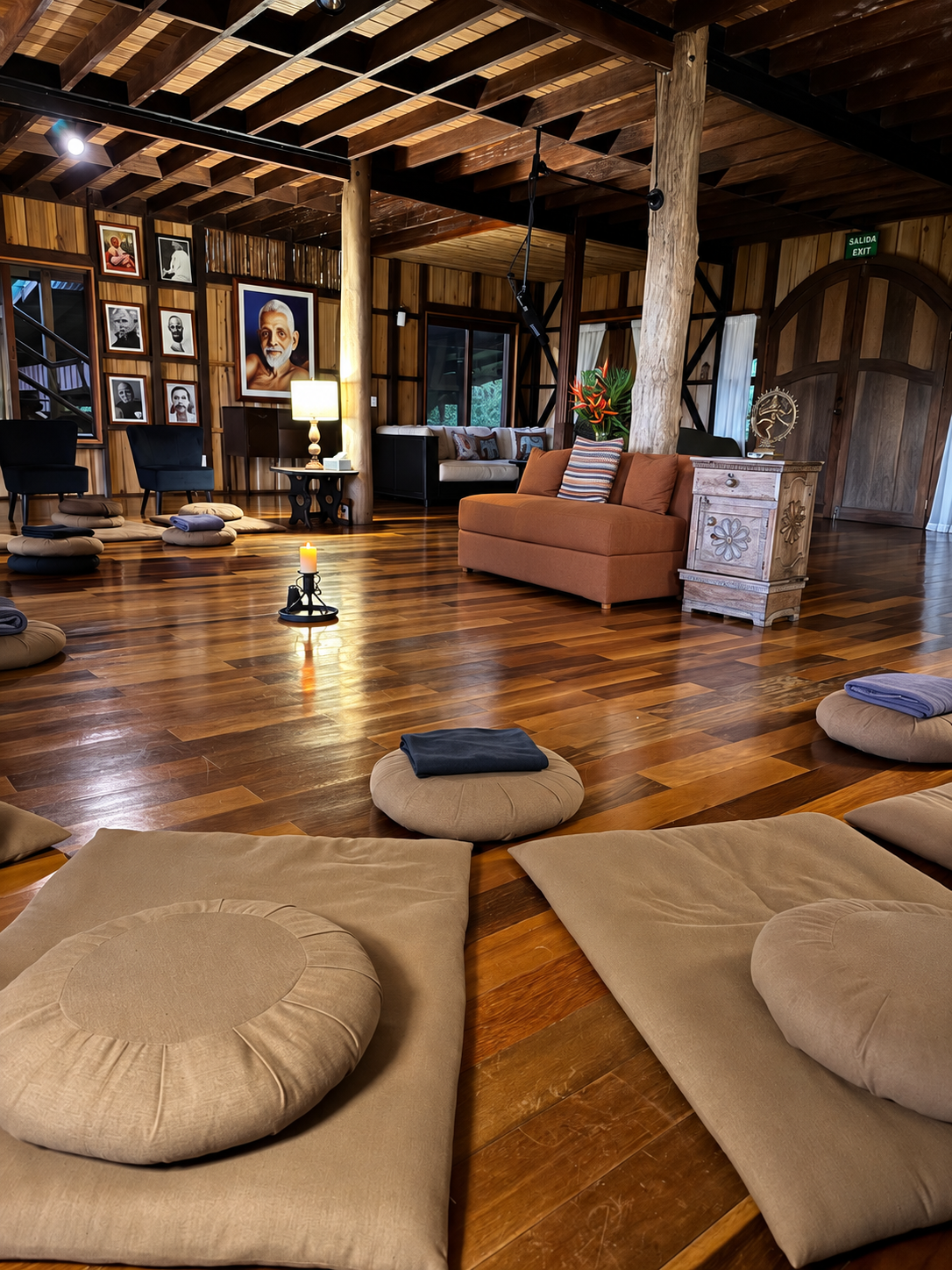
It was my second month at the ashram when my mind started to step out of its honeymoon period and wander into places it had spent much of its life trying to avoid. Although there were many residents on the property and I was rarely physically alone, somehow everything started to feel incredibly lonely. We were encouraged to spend a lot of time in solitude and silence. After some time, and what felt like an easy thing to do, I started to have painful realizations; I realized I had never truly experienced being alone for any significant period of time. Before coming to the ashram, there had always been someone nearby, somewhere to go, something to do, or some form of distraction available. Even when I was physically alone, it was never long enough for the deeper layers to surface. But at the ashram, the mind had nowhere to go. As the initial excitement of being there faded, my mind became uncomfortable. I became especially aware of this during our periods of silence; days could pass without a single conversation. My only exchange with another person might happen briefly in the kitchen while preparing food. Without the usual noise of conversation and distraction, my mind was left completely exposed, with what seemed like unending thoughts. What I had initially thought was loneliness became something I had never really allowed myself to experience: being alone. Without the familiar people, environments, and distractions that had filled the spaces in my life, I was left with what remained when all of that was taken away. For the next several weeks, I contemplated loneliness without trying to escape it. I began looking at it with curiosity about what it actually was, where it came from, and why the absence of another person could create such a profound sense of separation when, objectively, I was surrounded by people. I found an important difference between being alone and feeling lonely. We can be physically alone and experience deep peace. We can also be surrounded by friends, family, conversation, messages, and attention, and still feel an unbearable sense of isolation. If loneliness were simply the absence of people, this would not be possible. Something else must be happening… Loneliness isn’t an external condition. It is an experience within consciousness, and more specifically, it is intimately connected with the feeling of being a separate self. When another person isn’t available to distract us from loneliness, we get an opportunity to encounter the experience directly. Instead of immediately reaching for some psychological manifestation of distraction, we can become curious about loneliness as a phenomenon of human experience. Where is it? What is its shape? What does it consist of before thought tells the story of why it exists? What is that which knows loneliness? When we search for the lonely self itself, rather than its thoughts and sensations, what do we find? There we find experiences, yes. But the separate entity to whom those experiences supposedly belong is not there… There is the feeling of loneliness. But where exactly is the lonely one? This is the paradox of loneliness. I had arrived at the ashram believing that the discomfort came from being alone, when being alone had simply removed everything that had previously kept me from becoming aware of the feeling of separation within myself. The silence exposed it. For so much of our lives, we reach outward for something that will close the distance we feel between ourselves and existence. We seek another person or a community, a conversation that would distract us from uncomfortable truths. Maybe we seek for another place to belong. These things do bring us closer to ourselves. Another person can become a mirror where the boundaries of the separate self dissolve. But sitting in the silence long enough, I started to see that what I was searching for through others was not actually contained within that other person. Under loneliness I found awareness. Unchanged by whether someone was sitting in front of me or whether I was entirely alone. The distance I had been trying to close was the imagined distance between myself and life, created by the assumption that I existed somewhere inside this body, separate from everything I was experiencing. In that contemplation, I found peace. Solitude did not mean loneliness or emptiness. I still experienced my breath and heard sounds. I saw the sunlight moving across the floor. Life never stopped in the absence of another. This is what loneliness had taught me at the ashram. It was never about becoming comfortable without people, nor how to transcend the human desire for connection. It was about recognizing the intimacy that exists before that desire for connection. I had gone looking for what could accompany me in my aloneness, only to discover that I had never been separate from the experience of Being itself. We are never truly alone. |