What would the world look like if there were no moral authority governing action?
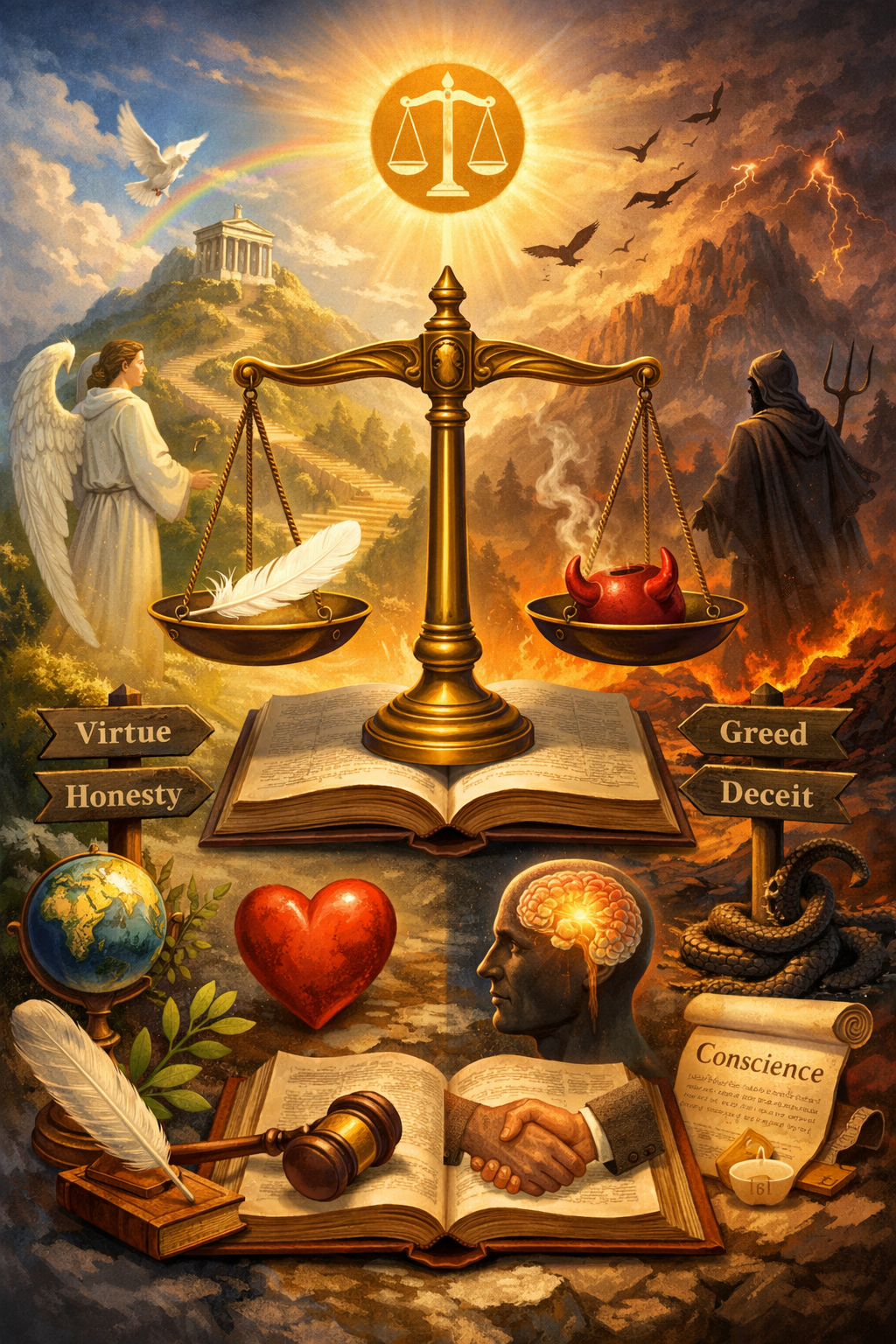
Moral authority requires a judge: a self that must uphold standards, and an external regulator that defines and reinforces those standards. Internally, this judge avoids guilt, accumulates virtue, and justifies action. Externally, rules, systems, and norms impose regulation and consequence. Together, they create a framework in which behavior is monitored, measured, and corrected.
When moral authority collapses, ethics depersonalize. Harm still produces effects, care responds to vulnerability, consequences still occur. What disappears is the internal judge saying, “This makes me good or bad,” and the external regulator superimposing moral control. Action is no longer filtered through identity or enforced through fear of transgression.
Without moral authority, action is no longer guided by ideals, responsibility becomes a natural responsiveness and is guided by situational intelligence. When no identity is being protected or proven, action naturally aligns with what reduces unnecessary harm without obstruction of that response. Ethics cease to function as law to enforce or project to complete; they are a byproduct of clarity and built-in internal moral virtues.
(These contemplations address inner reference, not outward action. When read without context, it can be taken literally or as behavioral guidance, which is not its intent. The highest teachings are not instructional, nothing is meant to be applied or enacted. If the language raises questions rather than instructions, the teaching is being engaged as intended.)
(Ashram Contemplations, Dec ’24)